For family therapists & clinical social workers
Spend less of your life on paperwork.
Kinscribe reads your intake notes and drafts the genogram, the ecomap, and the biopsychosocial write-up — then keeps every case in one place. You review, fix what's off, and reclaim the evenings the documentation used to take.
You review and approve every word. Nothing is filed without you.
For every hour with a client, one to two hours of notes. Most of it after everyone's gone home.
A profession this buried in paperwork deserves the time back. Kinscribe takes the most tedious part — the genogram and the write-up — off your evenings.
Who it's for
Built for the people who do family work.
- Family therapists (MFT)
- Clinical social workers (LCSW)
- Child-welfare & case workers
- Counselors
Cut the boring paperwork.
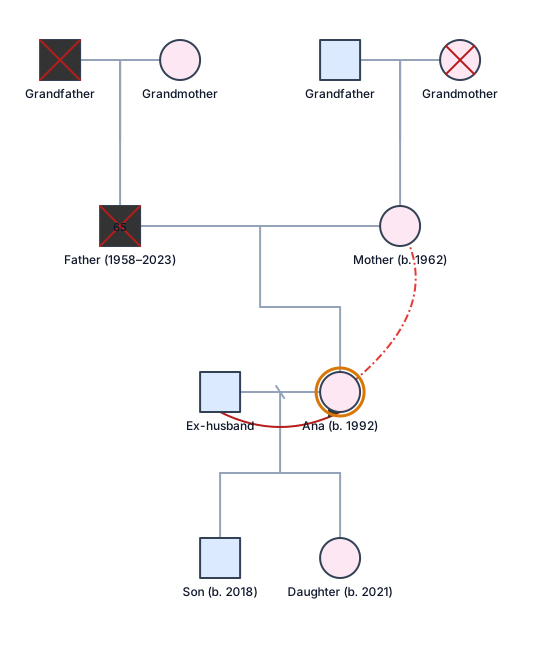
The genogram, the ecomap, and the biopsychosocial draft come back from your notes in the notation you already use — so you're editing and approving, never staring at a blank page at 9pm. Hours of charting become minutes of review.
Keep every case in one place.
Each case is a living workspace, not a one-off file. One family model sits behind every document — update the genogram once and the assessment, treatment plan, and progress notes stay in sync. Reopen any client and pick up where you left off.
The output
One case. Every document it needs.
Real output, in the standards you were trained on — genogram, ecomap, pedigree, and the written assessment, all from a single intake.
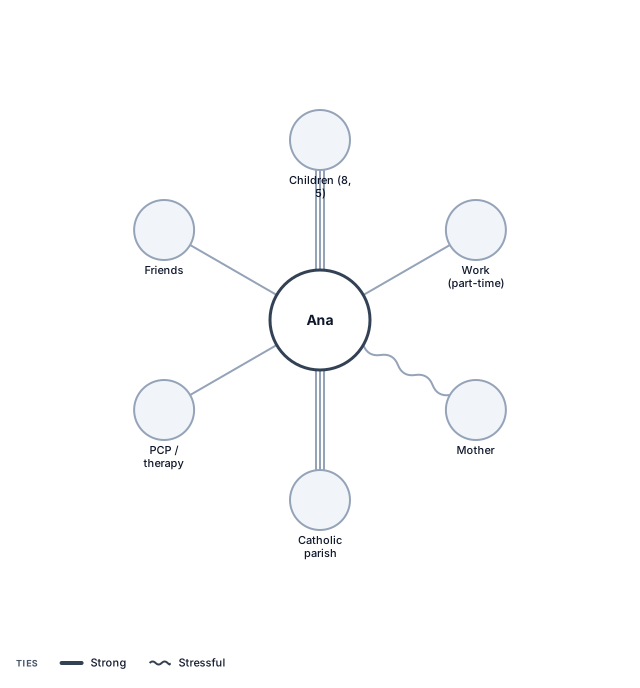
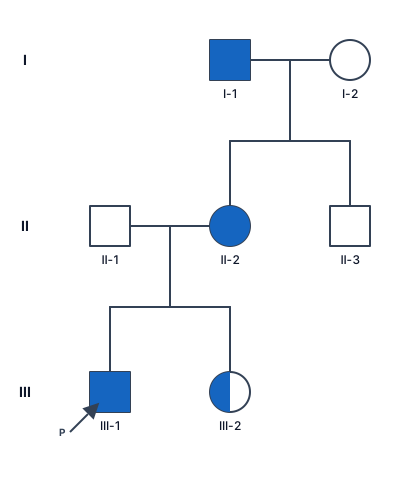
Divorced; ex-husband has a history of domestic violence. Estranged from her mother…

How it works
From a pile of notes to a case file — in three steps.
Tell it about the family
Paste your intake notes, type the story, or drop in a scribe note. No forms — just the way you'd describe the family to a colleague.
Get a draft package
A genogram and ecomap in standard notation, a biopsychosocial write-up, and a few patterns worth a second look.
Refine by talking — keep the case
“Make the relationship with her mother conflicted.” Every change shows what moved. Add the treatment plan and notes when you need them.
Where the line is
It drafts. You decide.
Kinscribe doesn't make the clinical call — it gets the structure and the first words down so you can do the thinking. Every line traces back to your notes, every change is shown to you, and nothing leaves your hands until you've approved it. You stay the clinician on the record.
Genogram tools stop at the picture. Kinscribe writes the assessment.
A genogram maker
- Draws the diagram — you still write everything.
- No ecomap, no narrative, no patterns.
- A one-off picture, not a case you come back to.
Kinscribe
- ✓ The genogram and the written assessment.
- ✓ Ecomap, pedigree, and the patterns worth flagging.
- ✓ A living case — one family model behind every document.
- ✓ Treatment plans and notes that stay consistent with it.
We're building this with a handful of clinicians.
If the paperwork has been eating your evenings, we'd like to hear how you work — and put early access in your hands.
A HIPAA-ready workflow is on the roadmap. You stay in control of every record.